DA: ESSAY

‘La Vie Etc’, our one-stop-shop for girls seeking advice on anything and everything. Our main concept from the start of the ideating stage was to create an online platform where females (roughly 18-22) could jump on and read up on topics such as university, personal life and all the bits in between. Our goal was to create a ‘judgement-free’ space where girls can share their personal experiences and feelings. This phase of an individual’s life often entails major changes, struggles and a time where a whole lot is going on. Alex and I wanted to create a forum where girls could go for advice, suggestions or just something interesting to read up on. Before promoting our website, Alex and I wrote down a whole bunch of article ideas and began writing. During the ideating phase, we settled on the key features of our project e.g. website design/aesthetic, article topics, Instagram account and much more.

Once we came up with our concept everything else fell into place relatively easily, particularly as we both were very passionate towards our topic and shared similar visions for the project! But of course, there were numerous learning experiences Alex and I endured. First and foremost, neither of us had had any previous experience in creating a website or creating a project of this nature. Alex and I were quite fortunate as the ideating, prototyping and making stages all occurred quite easily without any major struggles. This whole project was an enjoyable and fun experience as we were able to bring our creative visions to life.

Designing our website and Instagram page was a key component in our prototyping phase as it was crucial our layout was appealing to our target audience. We began by designing logos and website design layouts on paper. Once we were happy with the final design, we transferred it over to wix.com. Alex and I received such nice comments and feedback in relation to our website design. This was so reassuring as it made us feel like we were on the right track and making good progress!  

Figuring out the types of articles and topics we would write about was also a learning moment for Alex and I. Our main objective was to ensure they would be relevant and informative for our target audience, offering insight to topics or issues they may relate to. By breaking our topics into three categories i.e. University, Personal Life and Etc, Alex and I contemplated the types of topics we would find useful. In addition to this, we sent out polls and suggestion stories on social media to gain first-hand ideas from our audience. This whole process was made easier and more enjoyable as we had each other. We could therefore express our ideas, ask for help on particular difficulties and read one another’s articles before publishing.

Coming to the end of the semester, Alex and I are extremely happy with the project we have created and its progress throughout the semester. It is awesome to think we can continue with this online forum even though BCM114 has finished, it is exciting to think about where this could take us in the future!

xx

DA: MAKING

Over the course of this semester Alex and I’s project ‘La Vie Etc.’ which, is a girl’s advice column has grown and developed widely. A lot of thought, design, trial and contemplation has gone into this project and coming to the conclusion of this semester Alex and I couldn’t be happier with the process and end result. Our website design has definitely been a top priority on our list. When constructing the layout online and through paper prototyping it was key, we created an attractive and easy to navigate design. In order to achieve this our website comprised three key menus; ‘Home’, ‘Journal’ and ‘Gallery’. Once on the ‘Journal’ page we included a sub-section of headings including; All posts, University, Personal Life and Etc.

Essentially, this simplified the website as, if readers were particularly looking for university-based articles, they could click the university button and they would be provided with a list of articles. In saying this, we did come across some difficulty with using wix.com as our website was not accessible when using the university Wi-Fi. However, we overcame this obstacle by informing readers via our tweets and Instagram posts. Creating an attractive website design was particularly important for viewer engagement as readers are more likely to explore a website if the design is appealing to them.

In addition to this, a major part of our project was promotion and sharing via various social media platforms. As well as our weekly tweets informing followers of our updates and exciting news, Alex and I have also been posting stories, weekly quotes, pictures and suggestion polls via our Instagram page @toalexandkira. For us it was  essential to keep up our online profiles as by posting frequently would ultimately reach more individuals who would follow our Twitter and Instagram account.  Since posting our articles on social media our website La Vie Etc. has been growing in viewers. We wanted to be strategic in what order we would promote specific articles. For instance, since uni exams and assessments are approaching, we published ‘Our Tips to Stay Organised’ towards the conclusion of the semester as this is where it may be most relevant. 

Instagram became our main platform on which we promoted our website and updated readers on new articles. This was mainly due to convenience and it created a more personal atmosphere; the majority of the feedback we received was sent through via Instagram private messages. Our biggest engagement rose from Instagram as we often received DMs with positive feedback on our articles as well as suggestions to potential topics viewers would like to see.

It’s crazy to see how much this project has grown and how much fun Alex and I have had putting our ideas into a live project. Considering the positive feedback, we have received and the amount of views on our articles I would love to continue this project and see where it takes us!

xx

DA: PROTOTYPING

Over the past couple of months Alex and I have been working hard on our DA project, and it is safe to say we are very happy with our progress! Progressing on from the ideating stage in our project, we began to discuss our vision for how both our website and Instagram would look in order to attract our intended audience. We wrote down all of our ideas for what we wanted and brought it all together onto paper. This was  achieved through the help of YouTube videos such as ‘Rapid Prototyping 1 of 3: Sketching & Paper Prototyping‘. Paper prototyping our website was quite timely as we had various pages and menus to design. We drew up several designs for our logo ‘La Vie Etc.’ and once we decided on the design, we both liked, we created it using an online logo maker. 

As expected, bringing our website to life was not as easy as we had hoped. Using wix.com brought about several challenges as it was tricky to navigate the website in order to achieve our desired aesthetic. At one point we did decide to try out other website makers but ended up going back to Wix as the majority of them came at a cost. 

Alex and I have spent quite a bit of time thinking of ways which will engage our viewers and also attract new users. In order to do this, we sent out a suggestion poll on our Instagram page to see what our viewers would be interested in reading.

This was definitely a great idea as we received quite a few responses, all with similar responses. This helped us with new and exciting article topics which branch out from our three topics of Personal Life, University and Etc. We’ve included articles such as ‘Quick, Easy & (Semi) Healthy Recipes’, `10 Great Horror/Thriller Movies’ and ‘4 Steps to an Eco-Friendly Lifestyle’. Since promoting our articles on both Instagram and Twitter we have received quite a few views, our first article ‘Find the Perfect Date for You’ gained 40 views within a couple hours after promoting the article!

Alex and I are very happy with the progress we have made so far and are keen to see where this takes us!!

DA: PROJECT BETA

One month on from writing my DA ‘Ideating’ post and wow how things have changed and progressed! Where do I even begin? Our DA project is now officially up and running and we have gained increasing views and supporters. Within the space of a week or two, our Instagram page gained over 25 followers and we are currently on 81 followers. In an attempt to spread the word on our project we followed girls on Instagram who were following similar accounts to ours e.g. health pages, fitness accounts and so on. Moreover, we also followed friends and uni students. This was the way to go as it increased our fan base. In addition to this, we promoted our project through daily twitter updates and tracking our progress digitally as well as on paper.

Since promoting our project, we have received supportive and constructive feedback. As expected, our feedback has mainly been from females studying at university. We have also received advice and tips on how we can further our project and gain more attention e.g. seeking boys’ opinions and advice on our chosen topics. All of our  feedback has been beneficial in closely defining our target age group and helping us to improve upon our project. A key step in our DA process was paper prototyping where we engaged with readings as well as conducting further research. 

Whilst doing so we drew up sketches of how we would ideally like the website to look like when first opened. We also sketched some design for other layouts such as article menus and logos. 

As expected, we did come across a couple of obstacles, our main one being navigating wix.com. This was our chosen website creator as it was free and appealing. However, it proved to be a bit tedious. We did at one point consider converting over to WordPress however after watching YouTube tutorials we stuck with Wix. 

At this point, Alex and I are quite happy with our DA’s progress and are excited to see where it takes us!

xx

STORMZY – GRIME

Cultural appropriation is nothing new. Western cultures have been subject to appropriating and popularising varying art forms of several cultural groups for decades. The music industry, in particular, has been targeted by this practice. Cultural appropriation is particularly controversial as, in modern society, rich individuals from powerful majorities often appropriate from underprivileged minority groups. It can be argued that contemporary music can produce both ‘respectable fears’ and ‘subcultural capital’, appealing to youthful viewers who are attracted to its supposedly transgressive nature.

Artists from varying professions are likely or not to have engaged in cultural appropriation. The Jazz and Blues music style originated from the African-American culture and has since been appropriated by outsiders. Conversely, can it be said that all cultural appropriation in the music industry is negative, or can we view positive appropriation in modern music? A prime example that I will discuss is the UK Grime artist ‘Stormzy‘, who has broken down the stereotypes of grime music.

Music is commonly conceived as the language that knows no limits. It excels across countries, cultures, languages and generations. The beauty of music is not restricted one person or one group of people and you do not need to know how to read or write to enjoy it. The genre of Grime originated in the UK in the early 2000s. It has a raw and edgy feel to it, and it is this which has endured even though the audience of grime today has altered to that of almost 20 years ago. Fascinatingly, while Grime exceeded amongst its audience, the British public was not a fan of this up-and-coming genre. Continuously labelled by the media, Grime was branded violent and aggressive. Ultimately, this caused an attached stigma to the genre.  

It is interesting to see how in today’s society, Grime has become the voice of the British youth. Typically, the predominant audience of grime are white middle class, and it could be debated that white appropriation of grime music has led to its success. Grime was originally popularised on pirate radio stations. However, in recent years through political activity, Stormzy has helped break down grime from being an underground downloaded form of music. He has been a driving force for the genre of grime, breaking down social barriers and stereotypes. In 2017, he released his debut album ‘Gang Signs & Prayer’, peaking at No.1 on the UK chart, making it the first-ever grime album to reach this high on the chart. Stormzy has also won Best Grime Act at the 2014 and 2015 MOBO Awards. Starting as a rapper, Stormzy produced YouTube videos but did not gain much attention until he releasing his Wicked Skengman freestyle videos. 

Since then Stormzy has become a household name and has become one of the most influential artists to watch out for. To this date, ‘Shut Up’ is still his most successful single. The song was originally released on YouTube and soon reached No.8 on the UK Singles Chart. Stormzy calls himself “a child of grime” who is influenced by artists such as Wiley and Skepta.

Consequently, Stormzy has acted as a stepping stone to the genre of Grime, making it a more widely accepted form of music, particularly, in the UK.

REFERENCES:

Elias, P. (2016). Appropriation vs. Appreciation in Music: Where Should We Draw the Line?. [online] Blog.sonicbids.com. Available at: http://blog.sonicbids.com/appropriation-vs-appreciation-in-music-where-should-we-draw-the-line [Accessed 24 Aug. 2019].

Ilan, J. (2012). ‘The industry’s the new road’: Crime, commodification and street cultural tropes in UK urban music. Crime, Media, Culture: An International Journal, [online] 8(1), pp.39-55. Available at: https://journals.sagepub.com/doi/full/10.1177/1741659011433367 [Accessed 20 Aug. 2019].

Kareem Nittle, N. (2019). Cultural Appropriation in Music: From Madonna to Miley Cyrus. [online] ThoughtCo. Available at: https://www.thoughtco.com/cultural-appropriation-in-music-2834650 [Accessed 15 Aug. 2019].

Katsha, H. (2017). The Shift of Media Representation of Grime; Exploring how the White Middle Class have appropriated Grime. [online] Medium. Available at: https://medium.com/fwrd/the-shift-of-media-representation-of-grime-exploring-how-the-white-middle-class-have-appropriated-682453cad7eb [Accessed 23 Aug. 2019].

Lindsay, J. (2018). What is grime music? Definition and most famous artists | Metro News. [online] Metro.co.uk. Available at: https://metro.co.uk/2018/02/22/grime-music-definition-famous-artists-7333385/ [Accessed 24 Aug. 2019].

Thefamouspeople.com. (2018). Who is Stormzy? Everything You Need to Know. [online] Available at: https://www.thefamouspeople.com/profiles/stormzy-41978.php [Accessed 25 Aug. 2019].

Young, J. and Brunk, C. (2009). The ethics of cultural appropriation. Chichester: Wiley-Blackwell.

YouTube (2019). Stormzy. Available at: https://www.youtube.com/channel/UC7D-09kUG6Ei11SVO_deW_w [Accessed 21 Aug. 2019].

DA: IDEATING

What even is a digital artefact? And where do I even start? For myself and probably the majority of the BCM 114 cohort, we were all thinking this after week 1. Coming out of my tutorial you would think I would have had some idea of what this ‘digital artefact’ consisted of… sadly no. However, I was thrilled that this project was so broad, I could choose whatever I wanted, the possibilities were endless!!

In all honesty, I was quite excited to start brainstorming ideas with my friend Alex as we were looking forward to collaborating. The drive home from uni in week 1 was jam-packed with intense brainstorming and throwing around completely random ideas which, we found hilarious. We knew we needed to conjure up an idea within the week so we could get on top of the work early. We shortly agreed that our project would be focused on our common interests and hobbies in some aspect. During our 40-minute drive, we managed to cover topics from cooking shows to ‘how to change a tire’ to our take on conspiracy theories. For Alex and I, money and time were big contributing factors for our project. We wanted to create a product which, would be cost-efficient since we are currently studying at university. As well as this, we wanted to be time-efficient meaning, creating a product, which would not necessarily need much research since our focus is on our interests.

After having laid down the groundwork for our project we finally came up with our idea! Defining our target audience for our digital artefact was our first step and was easily agreed upon. Our target age demographic is 18-22 females, generally those attending university. We thought about this age demographic for a while and agreed it was the right choice as we fit into this age range and therefore have the most knowledge in this domain. Having first-hand experience, we are aware of the key causes of stress during university. Our vision is an advice page which, explores topics from money i.e. where to find the best affordable clothes, to studying tips and relationships. As soon as we came up with the general concept, everything started to fall into place. Alex and I were bouncing off one another’s ideas and our DA list grew and grew!

Up to this point, Alex and I have created our website and an Instagram account where we will post pictures, quotes and updates. At the moment we are writing up our articles on our main topics. Our website will have an email linked to it wherein viewers can send in questions, stories or topics they would like to read about. Readers can also contact us through our Instagram page, which will have an attractive design targeted to this audience.

Alex and I are both very excited to get straight into this project as it is something we are passionate about! Since we are both majoring in Marketing and Advertising, we chose social media platforms for our project as we believe it will best target our audience.

Lately, we have been researching reliable websites, blogs and YouTubers we follow which, correlate with our topics. Mainly I have been exploring holistic fitness/health pages, environmental blogs, which explore humanitarian issues and ways to become more sustainable, as well as other random pages/YouTube channels that have yummy snacks and fun ideas we could turn into an enjoyable article.

We would love to hear from you girls out there if there is anything you would like to see or anything you would like to read about! Watch this space for some exciting stuff!!

xx

ROMA (2018)

If you think about it, there isn’t such thing as a foreign language film. No language is foreign to everyone, every language is inherent to someone. We deem them foreign language films since they are in a language that is not English. With the rise of film production, there is an extensive range of foreign films which, are central to the history of world cinema. From Bollywood films to French New Wave, the world of film reaches far beyond the U.S and has so much to offer. How better to understand the ideals and values of our global populations by engaging with art created by their community?

In saying this, I viewed Alfonso Cuaron’s 2018 family drama ‘Roma’. Set in 1970s Mexico, this epic film combines farce, comedy and tragedy into one tearjerking masterpiece. Cuarón drew on childhood memories and so much of this film relays the personal story against a framework of a larger one – the human story, the face in the crowd. Cuarón’s captivating film focuses on the lives of two women. Cleo (Yalitza Aparicio) is a youthful woman working as a ‘live-in’ maid for an upper-middle-class- family. In tandem with her employer, Sophia (Marina De Tavira), Cleo’s private life begins to unravel.

Shot in pellucid black and white, the film adopts an attractive visual style. Cuarón hardly employs close-ups, keeping the audience at arm’s length from the characters. Therefore, allowing the aspects of the world around them to come to life. Black and white film allows the director to employ digital techniques, modifying and fabricating period features with a dreamlike feel. Considered some of the most remarkable imagery of the year, ‘Roma’ combines the surreal with the relatable to form one memorable image.

‘Roma’ embraces visual language to depict character and mood in ways his silent protagonist cannot. Due to Cuarón’s attention to detail, the film is designed to transport and immerse you. For those who build a connection with the characters, the film climaxes in a few touching scenes which, will shake you to the core. 

‘Roma’ is a noteworthy film for carrying on Alfonso Cuarón’s cinematic legacy. It has gained global attention and has been embraced by Western audiences and critics. Western cultures such as American and Australia, act as a stepping stone for filmmakers. Various films take on perspectives and settings from other cultures, whilst remaining essentially Western at their core. For example, the film Crouching Tiger, Hidden Dragon’, featured an ethnically Chinese cast, but was an international co-production involving major American production companies. Crouching Tiger, Hidden Dragon and Roma are the only two foreign-language films to be nominated for 10 Academy Awards. Engaging in both films, you will likely be able to draw comparisons.   

Cultural knowledge based around Mexico and the 1970s would surely help audiences intending to engage with the film. While Netflix is viewed across the globe, U.S viewers account for almost 75% of viewers (2018). Although Netflix has been featuring a larger variety of non-US content, Netflix has dubbed much of its foreign content in English as an ‘international strategy’ to cater to its American audience. Foreign content is being progressively ‘Americanised’. In saying this, Roma steers clear from this. Netflix released Roma in Spanish with subtitles, as this was a significant testament to Cuarón’s desire to keep his film authentically Mexican.

REFERENCES:

Alfonso Cuarón MEXICAN DIRECTOR AND SCREENWRITER. (2010). In: Encyclopaedia Britannica. Chicago. [Accessed 12 Aug. 2019]

Amazon.com. (2019). Amazon.com: Crouching Tiger, Hidden Dragon: Michelle Yeoh, Chow Yun Fat, Zhang Ziyi, Pei-pei Cheng: Amazon Digital Services LLC. [online] Available at: https://www.amazon.com/Crouching-Tiger-Hidden-Dragon-Michelle/dp/B000R3BMM0/ref=as_li_ss_tl?ie=UTF8&qid=1549596700&sr=8-1&keywords=crouching+tiger+hidden+dragon&linkCode=sl1&tag=cinemaescapis-20&linkId=29de7fd48e281af756d8d2aa5f253474&language=en_US [Accessed 12 Aug. 2019].

Bradshaw, P. (2018). Roma review – an epic of tearjerking magnificence. The Guardian. [online] Available at: https://www.theguardian.com/film/2018/nov/29/roma-review-alfonso-cuaron [Accessed 12 Aug. 2019].

Davey, K. (2019). Authentically Mexican, “Roma” Is Different From Other Hollywood Foreign Language Darlings. [online] Cinema Escapist. Available at: https://www.cinemaescapist.com/2019/02/roma-mexican-movie-hollywood/ [Accessed 12 Aug. 2019].

Miller, T. and Maxwell, R. (2016). Film and Globalization. In: O. Boyd-Barrett, ed., Communications, Media, Globalization and Empire. New Barnet, Herts, United Kingdom: John Libbey Publishing Ltd., pp.33-53. [Accessed 4 Aug. 2019].

Richter, F. (2019). Infographic: Netflix Passes 150 Million Paid Subscribers. [online] Statista Infographics. Available at: https://www.statista.com/chart/10311/netflix-subscriptions-usa-international/ [Accessed 13 Aug. 2019].

Tallerico, B. (2018). Roma Movie Review & Film Summary (2018) | Roger Ebert. [online] Rogerebert.com. Available at: https://www.rogerebert.com/reviews/roma-2018 [Accessed 10 Aug. 2019].

Tapley, K. (2019). ‘Roma’ Actress Yalitza Aparicio on the Challenge of Playing Alfonso Cuarón’s Real-Life Nanny. [Blog] Variety. Available at: https://variety.com/2018/film/awards/yalitza-aparicio-interview-roma-alfonso-cuaron-nanny-1202988697/ [Accessed 11 Aug. 2019].

Udden, J. (2009). Child of the Long Take: Alfonso Cuaron’s Film Aesthetics in the Shadow of Globalization, [online] 43(1), pp.26-44. Available at: https://www.jstor.org/stable/10.5325/style.43.1.26?seq=1#page_scan_tab_contents [Accessed 11 Aug. 2019].

Wood, J., Simonpillai, R., Scarano, R. and Herrera, A. (2018). 56 Foreign Films to See Before You Die. [online] Complex. Available at: https://www.complex.com/pop-culture/2018/12/best-foreign-films/ [Accessed 11 Aug. 2019].

REBEL WITHOUT A CAUSE

Dream as if you’ll live forever. Live as if you’ll die today

James Dean

‘Rebel Without a Cause’ would have to be one of my favourite old movies. Released in 1955, this American film by Nicholas Ray stares James Dean in the classic tale of teen angst and rebellion. This sadly was one of James Dean’s final acting roles as he passed away one month before the movies’ release. James Dean plays the character of Jim Stark, a sensitive but troubled youth, who although desperately wants to fit in, rejects his parents’ morals. Jims new in town and looking for a fresh start away from trouble, however, trouble always seems to find him.

Early on in the movie, Jim becomes known to a group of violent, rough boys who dare him to a game of chicken. Consequently, this leads to an accident and an unfortunate death. Being the sensitive teen he is, Jim attempts to confess to the Police, but his elders’ refuse him to do so. Tension surfaces as the violent boys suspect Jim will confess to the police.  

‘Rebel Without a Cause’ is a film, which sympathetically conveys rebellion, misunderstood, America, middle-class youth. The story of youthful disobedience offers a rich, but stylised outlook at the world of the conventional 1950s. The audience views this perception from the eyes of the main character ‘Jim’. Television dominated American culture during the 1950s. The 50s and future decades altered the nation’s outlook of youth, who became a vital part of society. 

If you have seen the film, it becomes quite clear that the intended audience was youth during the 1950s. Ultimately, the film served as a stepping stone for all youth rebellion films in the future. In 1955, Hollywood released two correlating youth films. In 1956, there was 10 and in 1957 there was 40. By the mid-1950s youth accounted for more than 50% of the ticket consumers for Hollywood movies. ‘Rebel Without a Cause’ was the first film to relate teen audiences on their terms. ‘Rebel Without a Cause’ is a perfect example of a film, which pushes the boundaries, having a social influence on its time due to its material. This classic film disturbed the social idea that home, community and school are essential environments for youth upbringing. In contemporary society, a movie like this is standard. However, in the 1950s, it attracted quite a lot of attention due to the social barriers it broke regarding these institutions.

Cultural knowledge based around the 1950s conventional lifestyle would surely help audiences intending to engage with the film. It is highly focussed on youth of the time, highlighting themes of miscommunication, masculinity and teen rebellion. Cultural homogenisation is a feature of cultural globalisation. It indicates a decrease in cultural diversity through conformity to common standards and cultural patterns. ‘Rebel Without a Cause’ presents a stylised view of 1950s American life. As a result, Western cultures such as Australia are able to relate closely due to the various similarities between cultures.

For anyone out there who also shares a love for classic movies, I highly recommend!!

xx

DECEPTION & FAKERY

“Deception” a universal term recognised as a deliberate offence, deceiving an individual in an attempt to unfairly benefit yourself, or to disadvantage another individual. Considered an ethical issue, deception embodies the use of words, conduct and is deemed misrepresentation. Linking deception to marketing and advertising, deceptive advertisements have the potential to influence consumers about the nature of the advertised product, thereby causing individuals to alter their judgments

Relevant studies reveal advertising deception and fakery potentially leads to defensive consumers and an increase in distrust towards further advertising claims. Numerous studies demonstrate increases in negative bias in consumers’ opinions concerning advertisements due to deceptive publicity. 

Linking concept to law, Section 18 of the Australian Consumer Law prohibits conduct, in business or commerce, which is ‘misleading or deceptive or is probable to mislead or deceive’. We view such characteristics in 2018 where the Australian food-manufacturing corporation ‘Heinz’ publicised misleading and fabricated health benefits. The published claims misinformed consumers on the  dietary contents of their ‘Heinz Little Kids Shredz’. Found guilty by the Federal Court of Australia, Heinz was fined $2.25 million as well as ordered to establish a consumer protection compliance program. 

MARKETING & ADVERTISING: UNETHICAL BEHAVIOUR

In the field of marketing and advertising varying forms of marketing frameworks restrict the possibility for engagement in unethical behaviour. This is because the evaluative elements in the exchange process are evident to the consumer. This in turn enables the buyer to objectively judge the exchange situation in making an informed decision. Alternatively, there are such instances where consumers are unable to accurately understand and assess a products’ value, thereby creating scope for marketers to engage in unethical behaviour

 Linking this concept to the case of Heinz, the corporation engaged in misleading and deceptive advertising. In this instance, the companies’ actions were considered unethical as they advertised fabricated and misinformed statements whilst engaging in conduct liable to deceive consumers. Heinz ‘Little Kidz Shredz’ products were falsely advertised to be as nutritious as natural fruit and vegetables, where in fact 60% of the product contained sugar. 

Advertising is considered an integral feature of a business entity. Corporations expend billions of dollars annually to promote their products. Advertising is a form of communication employed to persuade a targeted group to take on new action. Advertising is recognised as a vital component for economic growth of marketers and businesses in competition.

HOW ETHICAL ISSUES AFFECTS PROFESSIONAL PRACTICE 

Ethics is defined as a code of principles, which govern the actions of an individual regarding what is right and what is wrong. Depending on the point of view, they determine our behaviour when confronted with a moral dilemma and are often subjective. Due to their nature of being subjective, ethical values fluctuate internationally. Ethical practices alongside unethical practices can influence marketing and in some circumstances, unethical behaviour can prompt government intervention

It is known, professional practice in a marketing sense is likely to be subjective by ethical behaviour and issues. In a marketing deal, all existing parties hold expectations relating to how the business relationship will exist. Ethical marketing decision-making should exceed the needs of consumers, business associates and suppliers. Conversely, unethical behaviour including selective advertising, price wars and deceptive publicising has the power to negatively impact a corporation’s relationships

Current trends display an increase in consumers’ favouring ethical companies. Consequently, ethics itself is a selling point and a key aspect of a company’s image. 

HEINZ CASE PROCEEDINGS & OUTCOMES

The foundation of this case was built around the advertising code of ethics, which states ‘advertising or marketing communications must not be misleading or deceptive’. In a struggle to prove the wrongdoings of Heinz, the court ruled that the ACCC insufficiently proved the ‘Kidz Shredz’ product to have illustrated that they were of equal dietary value to that of fruit and vegetables. Moreover, They were unable to demonstrate that the products encouraged the development of healthy eating habits in children. 

In summary, the court agreed the statements and illustrations published on the packaging, conjured up the impressions of nutrition and health. 

Subsequently, the Shredz product range, which was available nationally in supermarkets since 2013, is now no longer for sale. In addition to the case, The World Health Organisation (WHO) recommended reducing the consumption of products containing fruit juice concentrate in an effort to minimise the risk of obesity.

“We welcome the Court’s decision today which shows that businesses that make false or misleading claims about the health benefits of products face serious consequences,” 

– ACCC Acting Chair Delia Rickard – 

HOW IS DECEPTIVE ADVERTISING PUNISHED? 

In the case of deceptive publication, an advertiser may be able to repair the damages done without incurring further consequences depending on the severity of the breach of false advertising laws. In relation to the law, section 29 of the Australian Consumer Law states it is unlawful to ‘make a false or misleading representation that goods are of a particular standard, quality or value’.  

In the ruling for Heinz’s advertising breach, counsel Tom Duggan of the ACCC claimed Heinz to have a substantial penalty imposed to act as a warning. The Federal Court of Adelaide found the action of Heinz Corporation involved “willful” and “recklessness”. Furthermore, the ACCC argued the seriousness of the situation due to the possible implications for the health of young children. 

“Each of the Heinz nutritionists ought to have known that a representation that a product containing approximately two thirds sugar was beneficial to the health of children aged 1-3 years was misleading”  

– Justice Richard White –

MARKETING & ADVERTISING CONSIDERATIONS 

In relation to the Heinz vs ACCC deceptive advertising case, there are several precautions companies can employ to minimise the risk of breaching the Australian Consumer Law. Firstly, food production companies should ensure their product development and marketing evaluation process encourages thorough consideration of the accuracy of any product claims, including claims that may be implied from product packaging. 

Linking considerations to the case, one in particular directly correlates. In order to avoid infringements of the ACL, companies must not assume the presence of nutrients and ingredient information. Required by the Australia New Zealand Food Standards Code, will “cure” any untruthful representations about the “healthiness” of the product. 

The nutritional information depicting the ‘Shredz’ product contained two-thirds sugar had no impact on the court’s verdict that Heinz had breached the ACL. Considered by the court, it was improbable that consumers would examine the nutritional ingredients prior to purchasing. Conclusively, this demonstrates how fine print cannot counteract the leading marketing message.

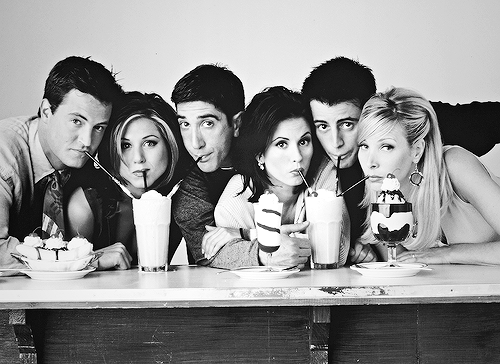
F.R.I.E.N.D.S.

In today’s age, media acts as a key contributor in everyday life as its job is to inform, educate and entertain. If we look back over 10 years it is pretty clear how we view media has altered in some form. Arguably, the most significant invention of the 20th century (disregarding the Internet) has been the Television. Television is an influential and flexible tool, which influences the public to great lengths, both positively and negatively. Television is the voice of the voiceless and a driving power in constructing society. However, in recent years this global device has fallen under threat to media viewing platforms such as Netflix and Stan. 

American programs have dominated the networks and presented an America way of life to Australians since the introduction of television in Australia in 1956. This ultimately has encouraged modifications to the Australian culture. Australian audiences, alongside many others, can identify with characters in tv programs. This is a necessary feature to successful filmmaking. Popular TV series subconsciously engage viewers to participate mentally with the programs’ leading characters.

This is the case for NBC’s American TV sitcom ‘F.R.I.E.N.D.S’. Aired in 1994 the TV series follows the professional and private lives of six friends living in Manhattan. The iconic series is jam-packed with interesting and unique characters among their emotional and hilarious moments. This sitcom is broadly considered as unforgettable and iconic. It launched the careers of several actors and created a passionate fandom. In modern society, F.R.I.E.N.D.S remains one of TV’s most loved sitcoms. Although it did not officially air in Australia until 1996, this 10 season show is globally remembered as one that defined its era. It wasn’t until a few years ago when Netflix announced their release of F.R.I.E.N.D.S. 

Personally, this is one of my favourite TV series, if you are looking for an easy binge show, then this is perfect for you! Although I do not fit into the age demographic of the characters, I still find myself relating to various aspects of the characters lives. The global success of F.R.I.E.N.D.S can be attributed to its timeless nature. For the years to come, 20 something year old’s can still relate to this American sitcom due to its relevance of life obstacles and experiences we  may endure at some point. 

From the constant change in careers, whether you are being promoted or laid off, to going from depending on your parents to being completely self-sufficient, F.R.I.E.N.D.S remains a series which truly captures this age demographic. Although this TV series has been relocated onto Netflix, there are still some channels, which shows reruns. From this, we can understand how the shows’ popularity continues to excel both on free to air TV and online viewing platforms. 

I love the F.R.I.E.N.D.S series, so if anyone is looking for a good binge-worthy show I highly recommend!

REFERENCES:

Allen, G., Feils, D. and Disbrow, H. (2014). THE RISE AND FALL OF NETFLIX: WHAT HAPPENED AND WHERE WILL IT GO FROM HERE?. JOURNAL OF THE INTERNATIONAL ACADEMY FOR CASE STUDIES, [online] 20(2), pp.119-123. Available at: https://www.abacademies.org/articles/jiacsvol20no22014.pdf#page=129 [Accessed 3 Aug. 2019].

Curtin, M. and Shattuc, J. (2009). The American Television Industry. Bedford Square, London: Bloomsbury Publishing Plc, pp.1-8, 11-13. [Accessed 4 Aug. 2019]

Donahue, A. (2014). Friends: 20 years old and still the best-ever show about twentysomethings. The Guardian. [online] Available at: https://www.theguardian.com/tv-and-radio/tvandradioblog/2014/jan/08/friends-20-years-best-show-twentysomethings [Accessed 3 Aug. 2019].

Lowe, A. (2014). Twenty years of Friends: the 20 best episodes. The Sydney Morning Herald. [online] Available at: https://www.smh.com.au/entertainment/tv-and-radio/twenty-years-of-friends-the-20-best-episodes-20140922-10k5vx.html [Accessed 4 Aug. 2019].

Monaghan, E. (2016). Television Through the Decades and the Ways It Changed Our World. [online] TopTenReviews. Available at: https://www.toptenreviews.com/television-through-the-decades-and-the-ways-it-changed-our-world [Accessed 4 Aug. 2019].

Plesa, A. (2000). Where to watch Friends online in Australia | finder.com.au. [online] Finder. Available at: https://www.finder.com.au/where-to-watch-friends-online [Accessed 5 Aug. 2019].

Williams, D.S. (2019). How Filmmakers Connect With Audiences. [online] Movieoutline. Available at: http://www.movieoutline.com/articles/how-filmmakers-connect-with-audiences.html [Accessed 4 Aug. 2019].